

Crown Hair Transplant
Crown Hair Transplant – Vertex Hair Restoration
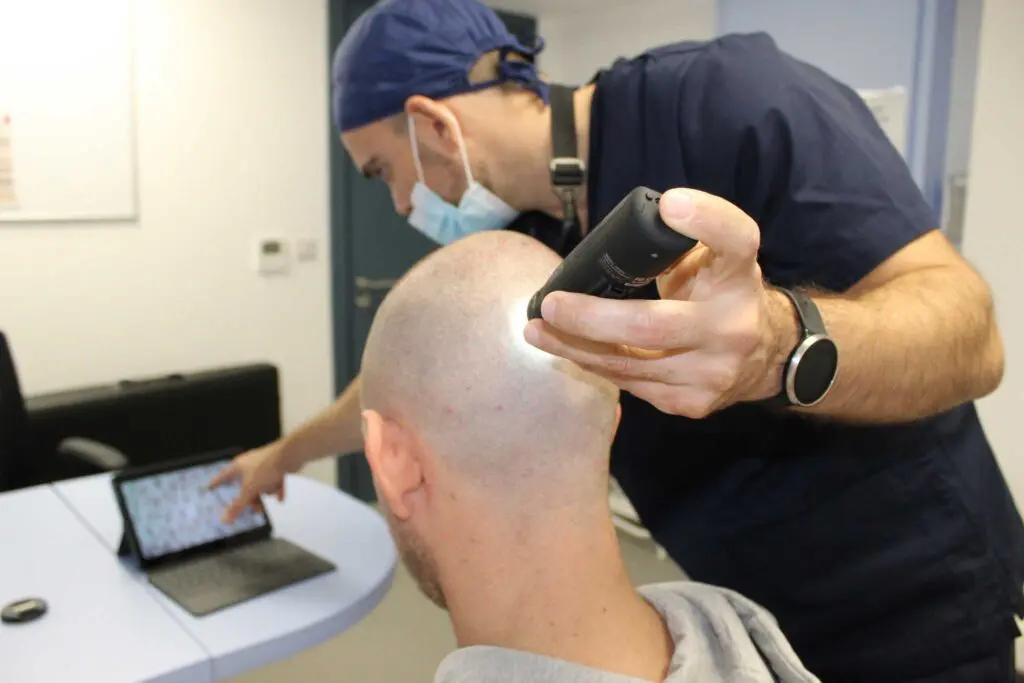
Thinning at the crown is one of the most common patterns of hair loss and often the hardest to disguise. A crown hair transplant rebuilds density at the vertex with single-follicle precision, restoring even coverage that follows your natural swirl.
The basics
What is a Crown Hair Transplant?
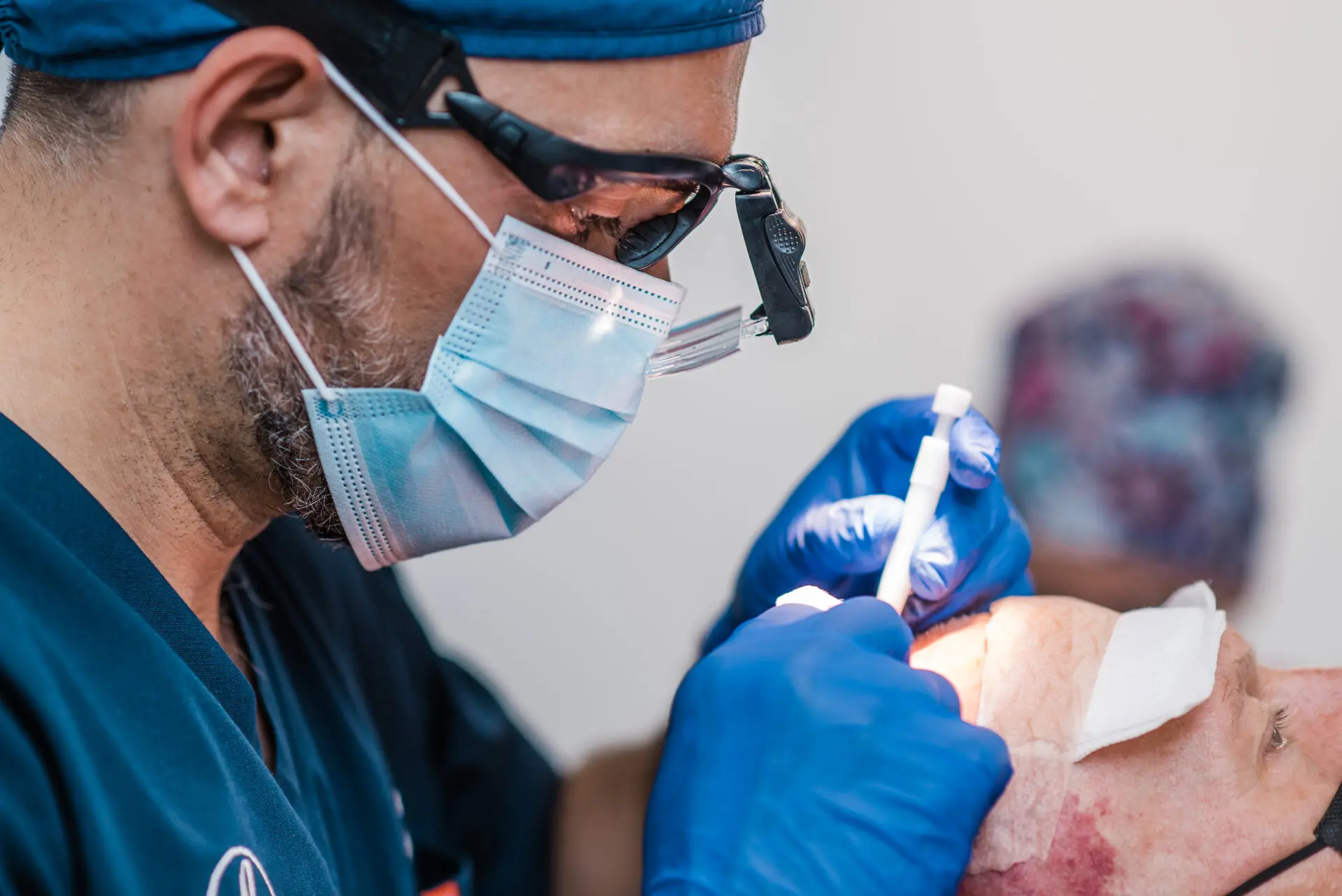
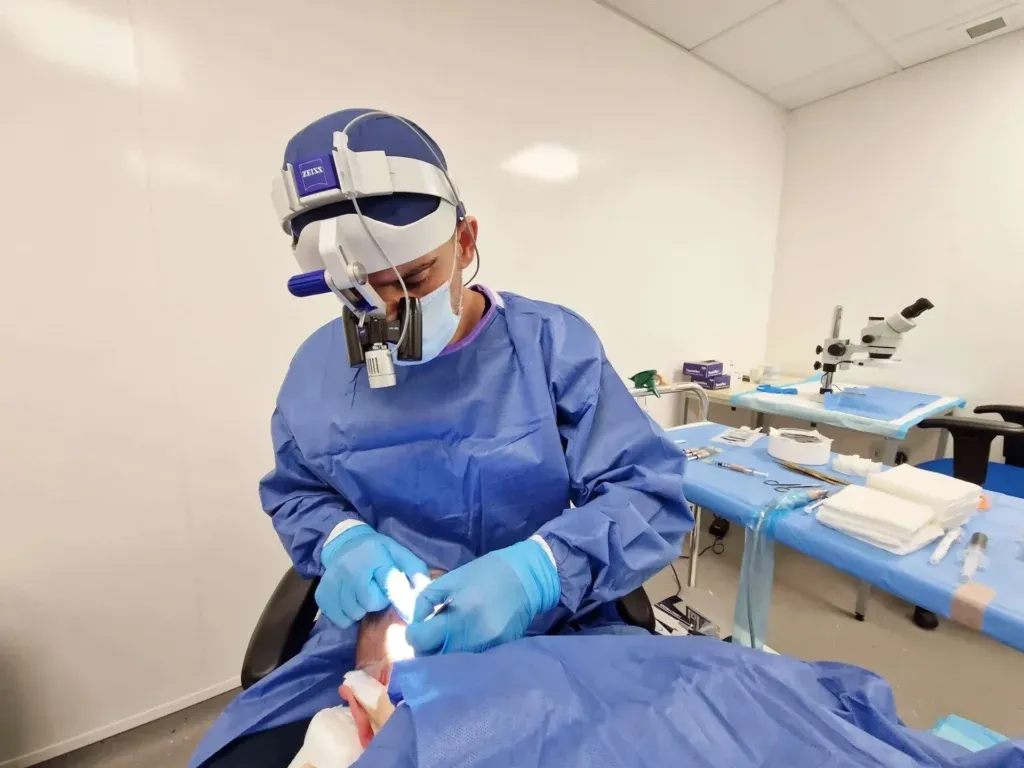
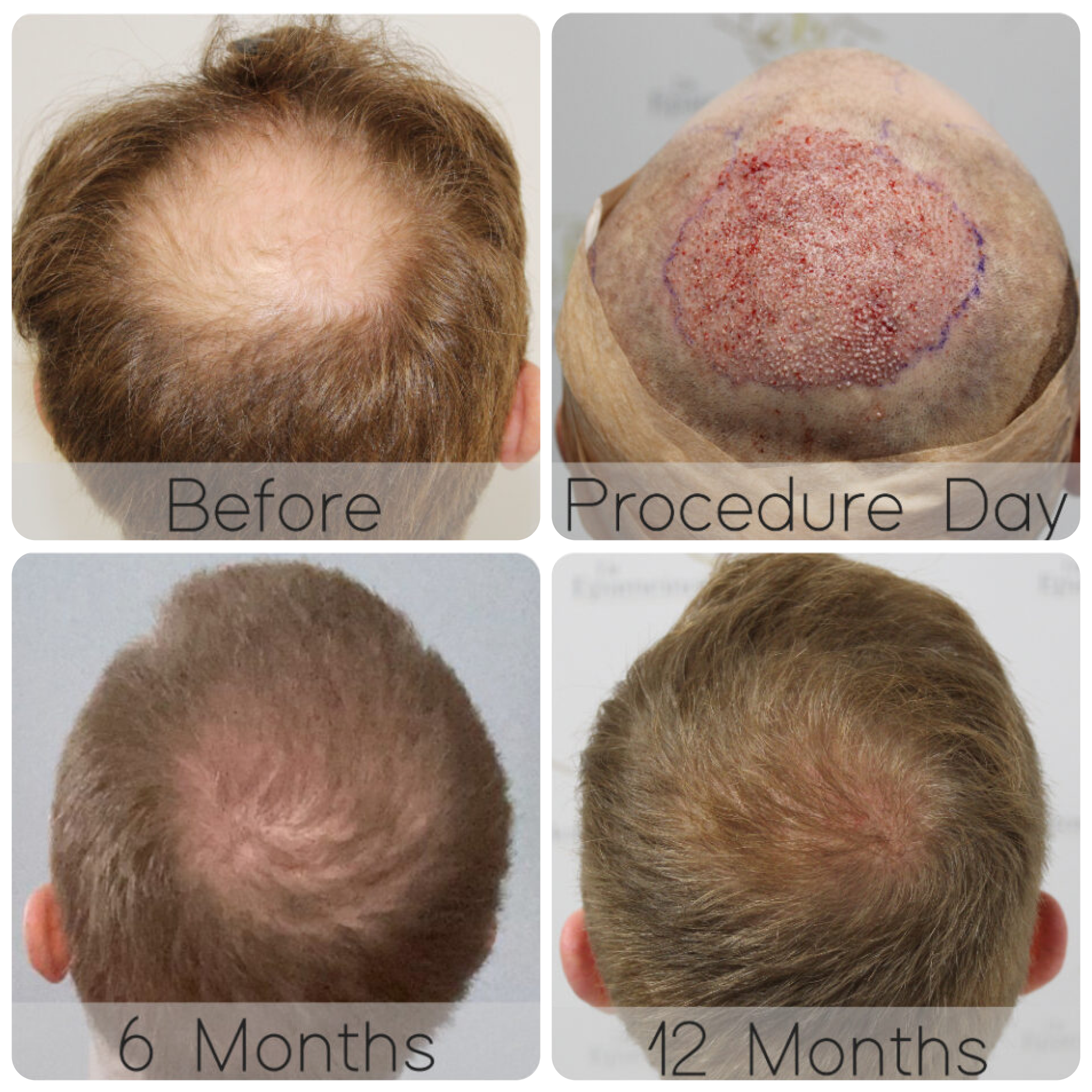
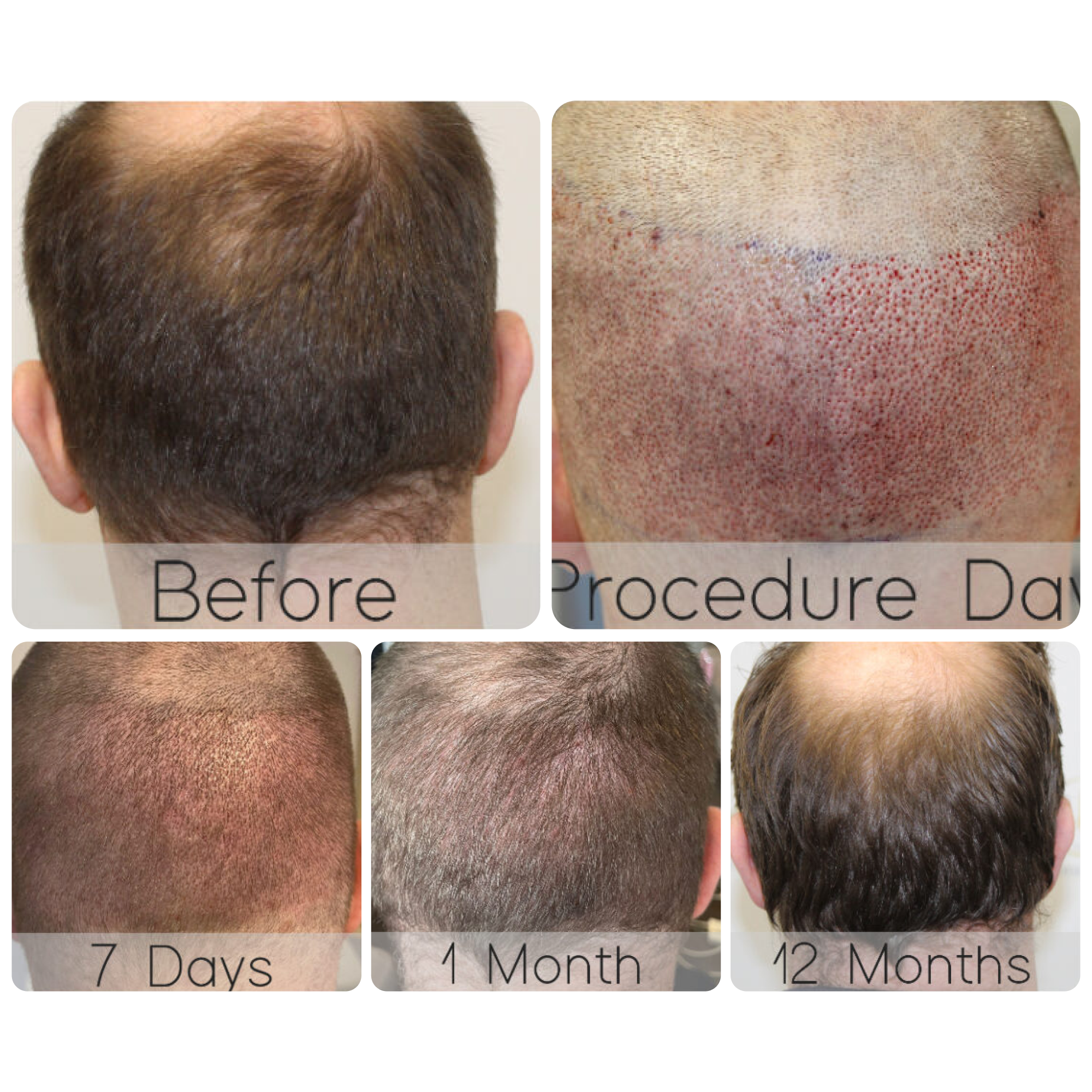
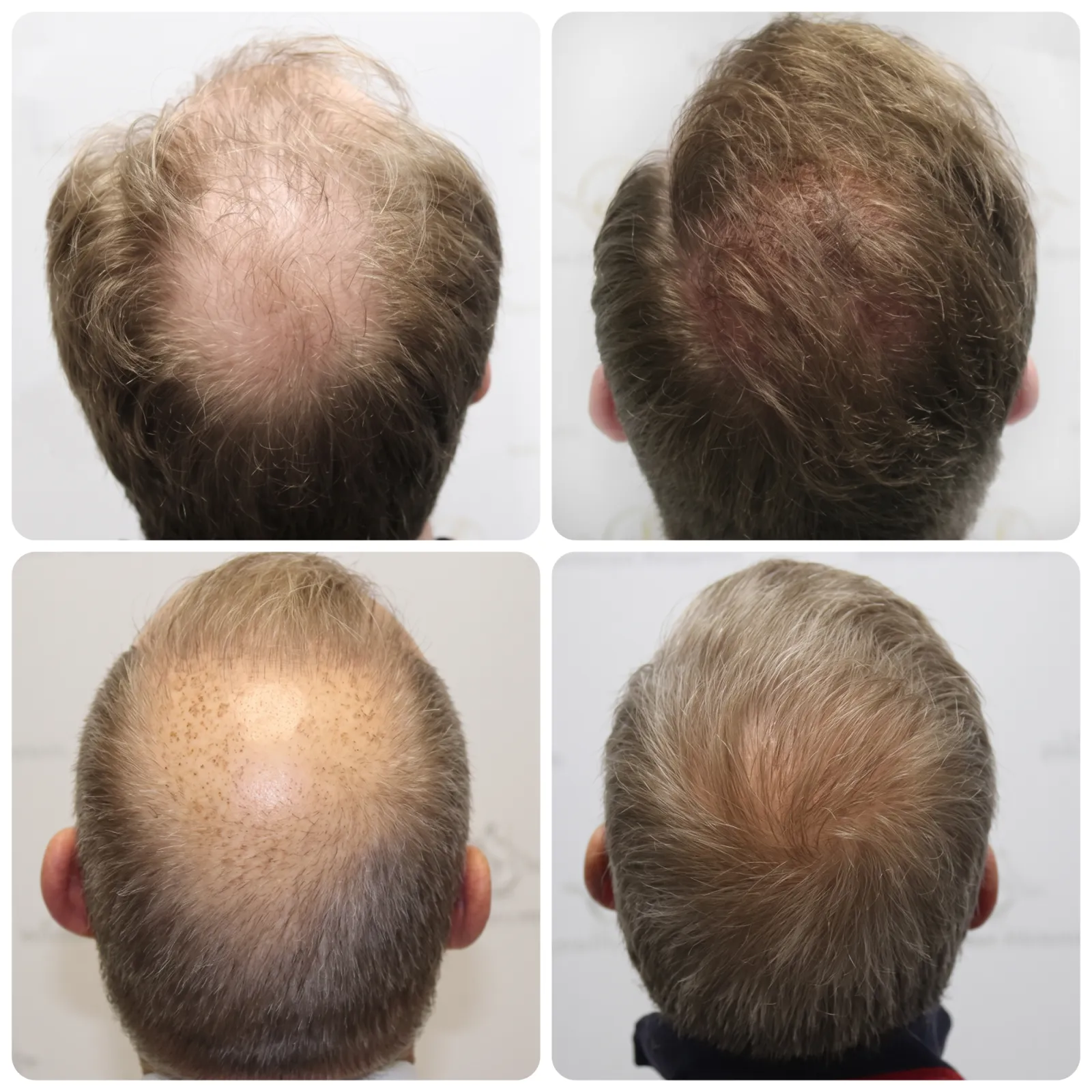
A crown hair transplant is a procedure that restores density and coverage to the vertex — the swirling area at the back and top of the head. Using the FUE technique, individual follicles are harvested from a donor area at the back of the head and implanted one by one across the crown to recreate a natural growth pattern.
The crown is technically challenging because of its whorl, its curvature and its size. Dr Bonaros plans and performs every stage himself, mapping the swirl and placing each graft at the correct angle so the restored crown blends seamlessly with the rest of your hair.
The FUE method
Benefits of the FUE Method
Follicular Unit Extraction (FUE) is the modern gold standard for crown restoration. Rather than removing a strip of scalp, follicles are harvested individually, which means no linear scar and a far easier recovery. The key benefits include:
- No linear scar — only tiny, virtually invisible extraction points
- Minimal discomfort and a faster recovery
- Natural, undetectable results placed one graft at a time
- Suitable for rebuilding a thinning or bald crown
- Performed personally by Dr Bonaros from start to finish


Respecting the Whorl
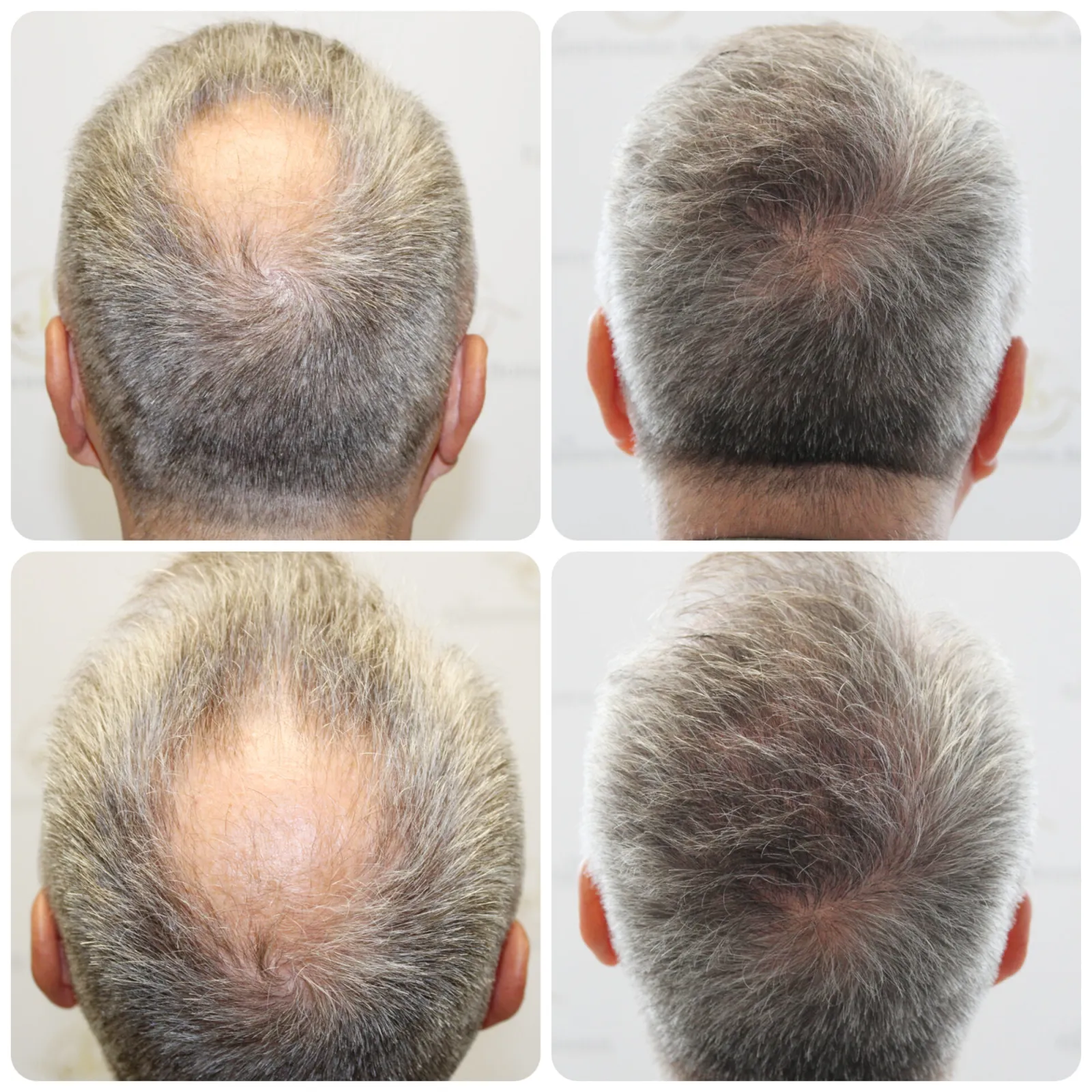
The crown has a natural swirl, or whorl, where hair grows outward in a spiral. Rebuilding this pattern with the correct angles and direction is essential for a result that looks completely natural.

Coverage Over Density
The crown is a large surface area. We prioritise even coverage that hides scalp show-through, rather than concentrating grafts in one area at the expense of the rest.

Long-Term Perspective
Crown thinning tends to expand over time. We plan the transplant and use your donor supply with the future in mind, so the result remains balanced as any further loss develops.

Balancing the Crown with the Rest of Your Hair
A restored crown should sit in harmony with the mid-scalp and hairline. We plan the density and blend so the vertex looks like a continuation of your existing hair, not a patch.
The procedure
How a Crown Hair Transplant is Done
A crown hair transplant is a carefully staged, single-day procedure carried out under local anaesthetic. Here is what each stage involves.
The area of thinning at the crown is mapped and agreed with you, the donor area is prepared, and local anaesthetic is administered for a comfortable, pain-free procedure.
Individual follicular units are harvested one by one from the donor area using the FUE method, leaving no linear scar.
Grafts are sorted by the number of hairs they contain and kept in optimal conditions to maximise survival before implantation.
Each graft is placed directly into the crown at the correct angle, depth and direction to recreate the natural swirl of the whorl.
Patient stories
Five-star care, in their words
“From the first consultation I knew I was in safe hands. Dr Bonaros did everything himself and the result looks completely natural.”
“Honest, professional and reassuring throughout. He told me exactly what was realistic — no hard sell. I could not be happier.”
“The attention to detail on my hairline is incredible. Friends have noticed I look younger but cannot tell I had anything done.”
“A genuinely world-class surgeon right here in Scotland. The whole experience felt premium and personal from start to finish.”
Results
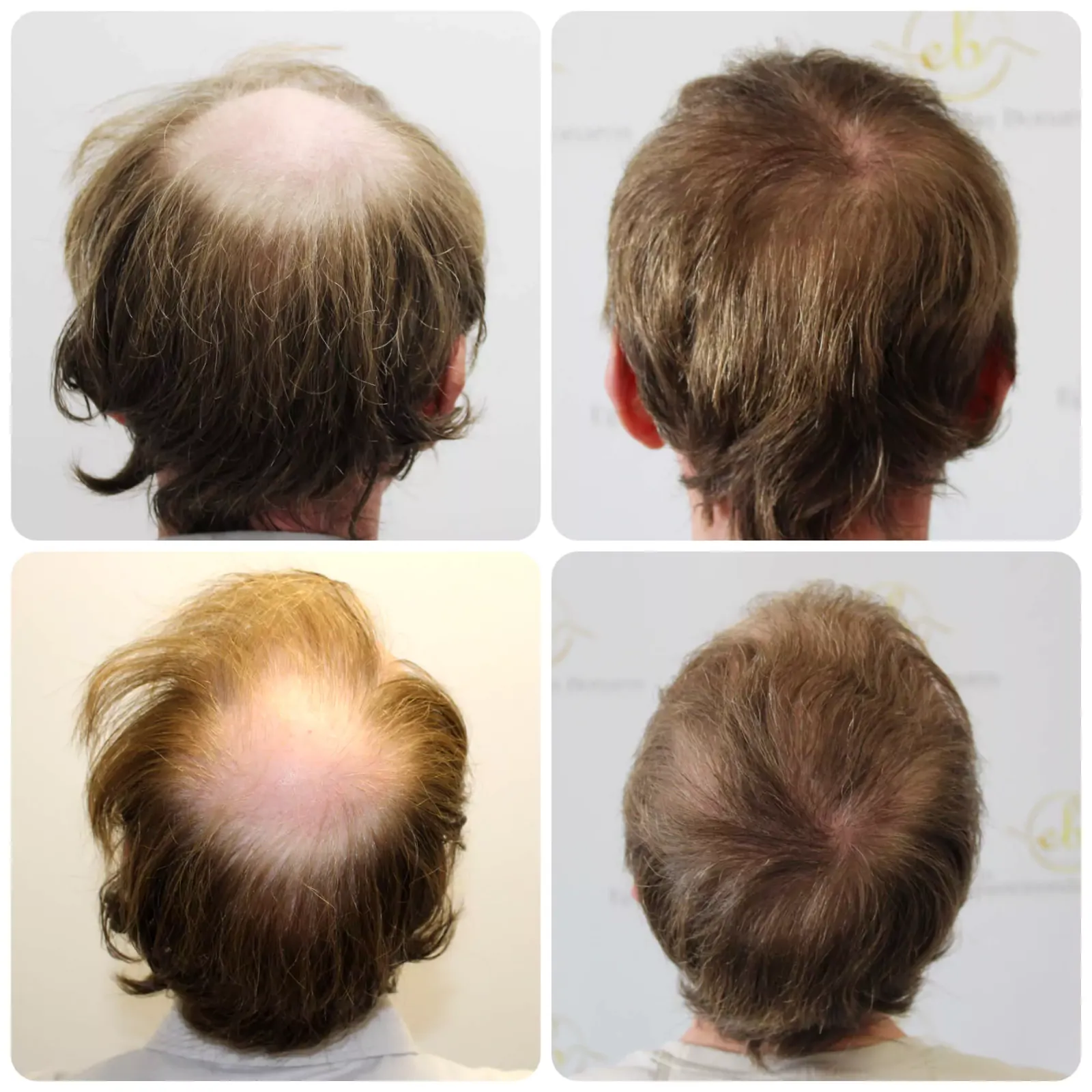
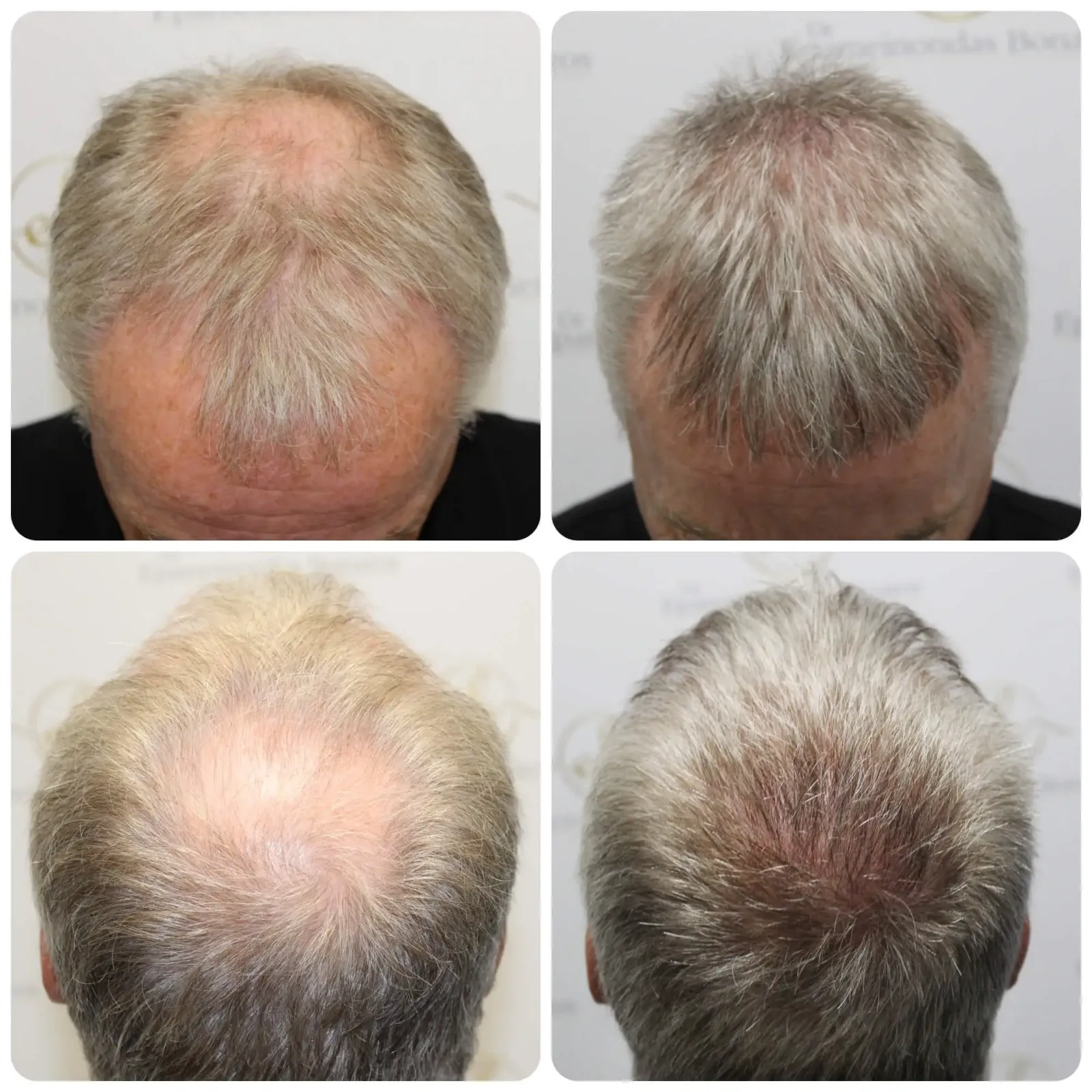
Case Studies
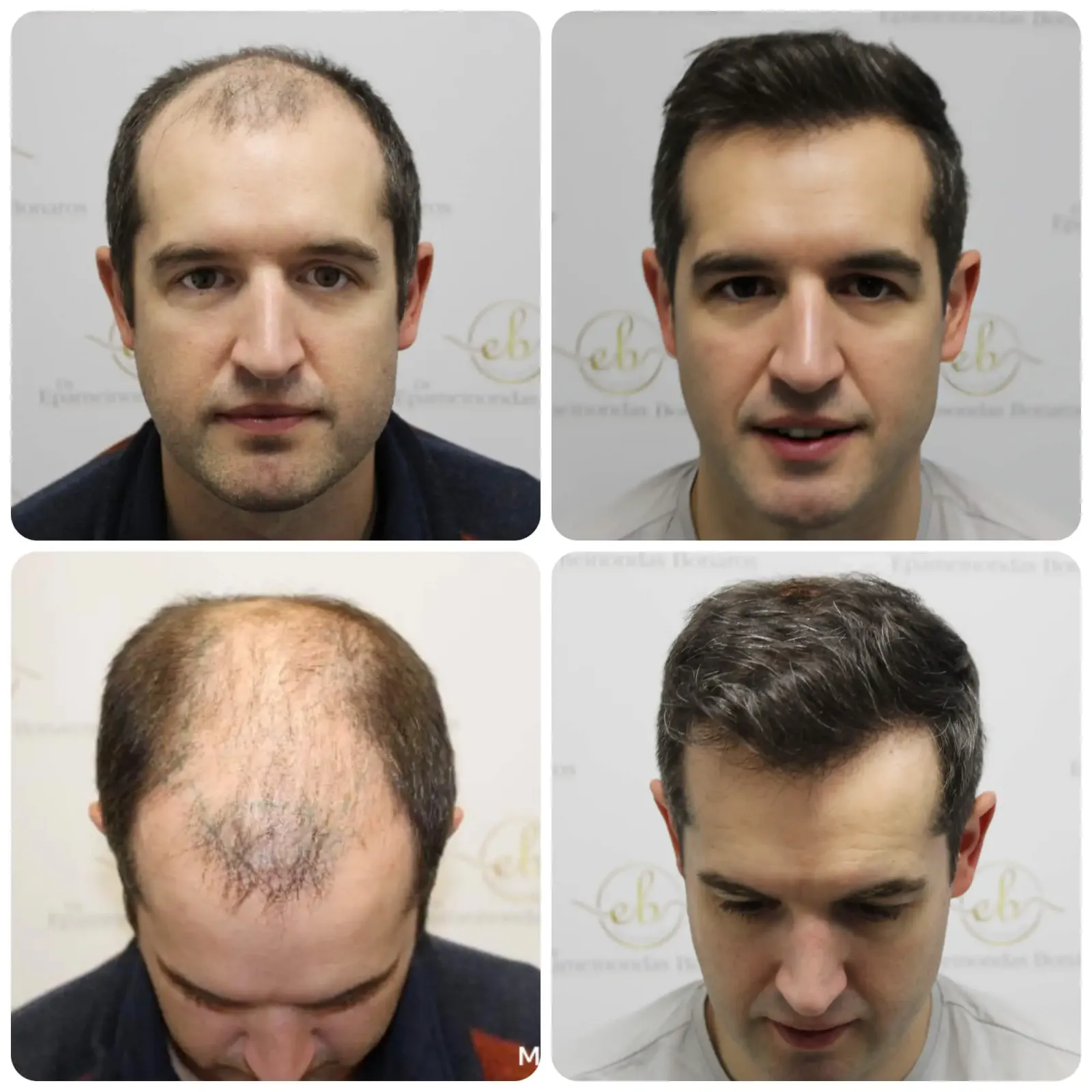
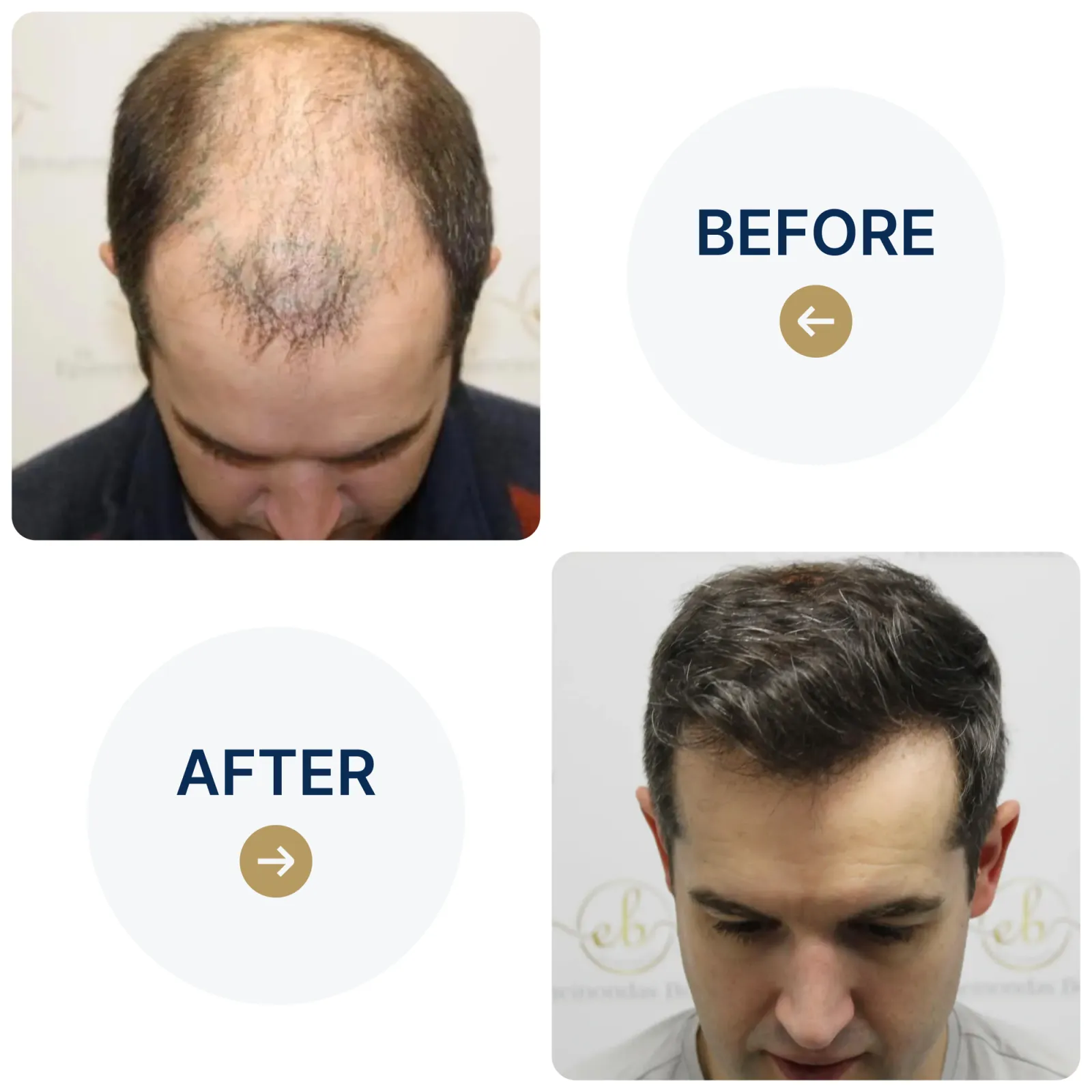
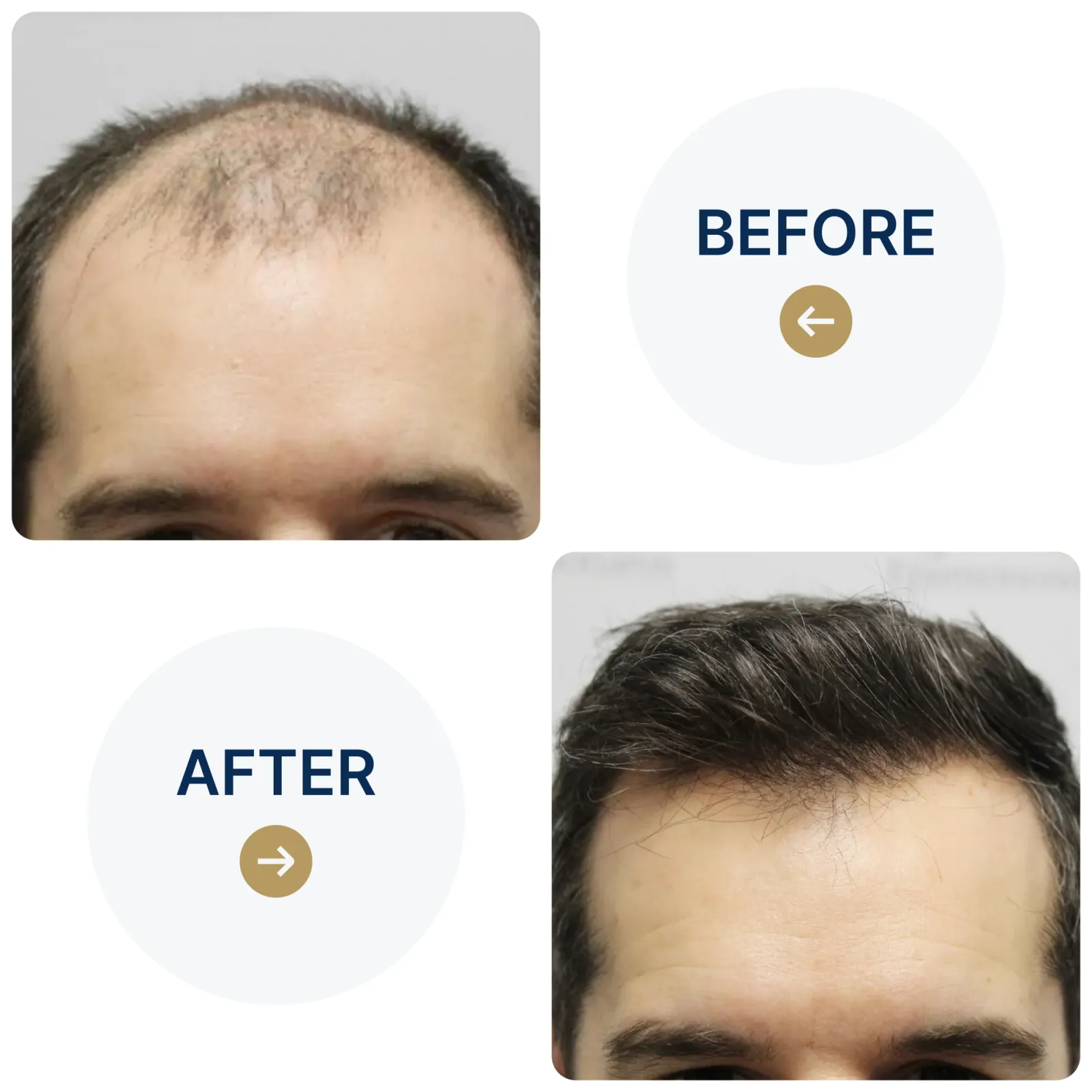
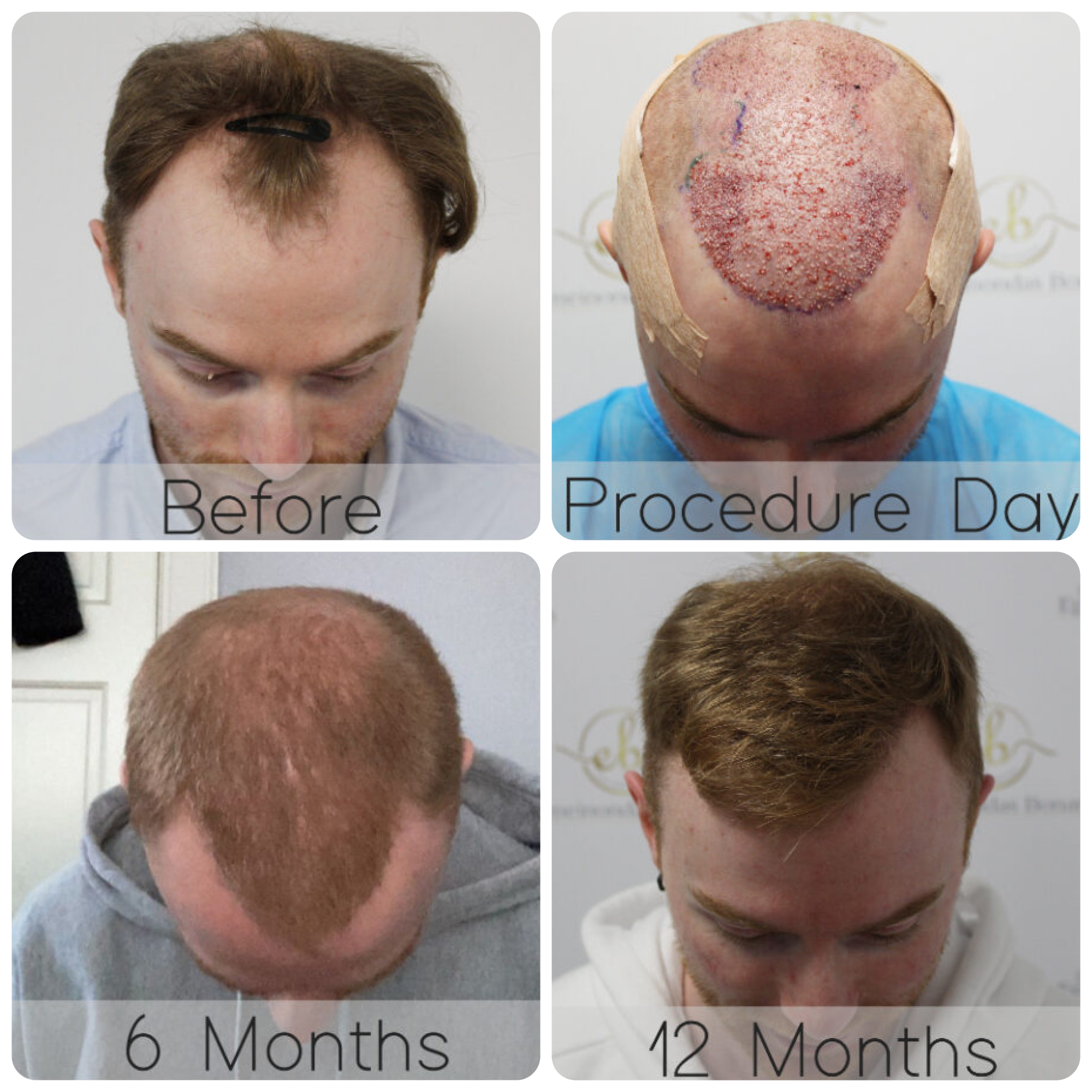
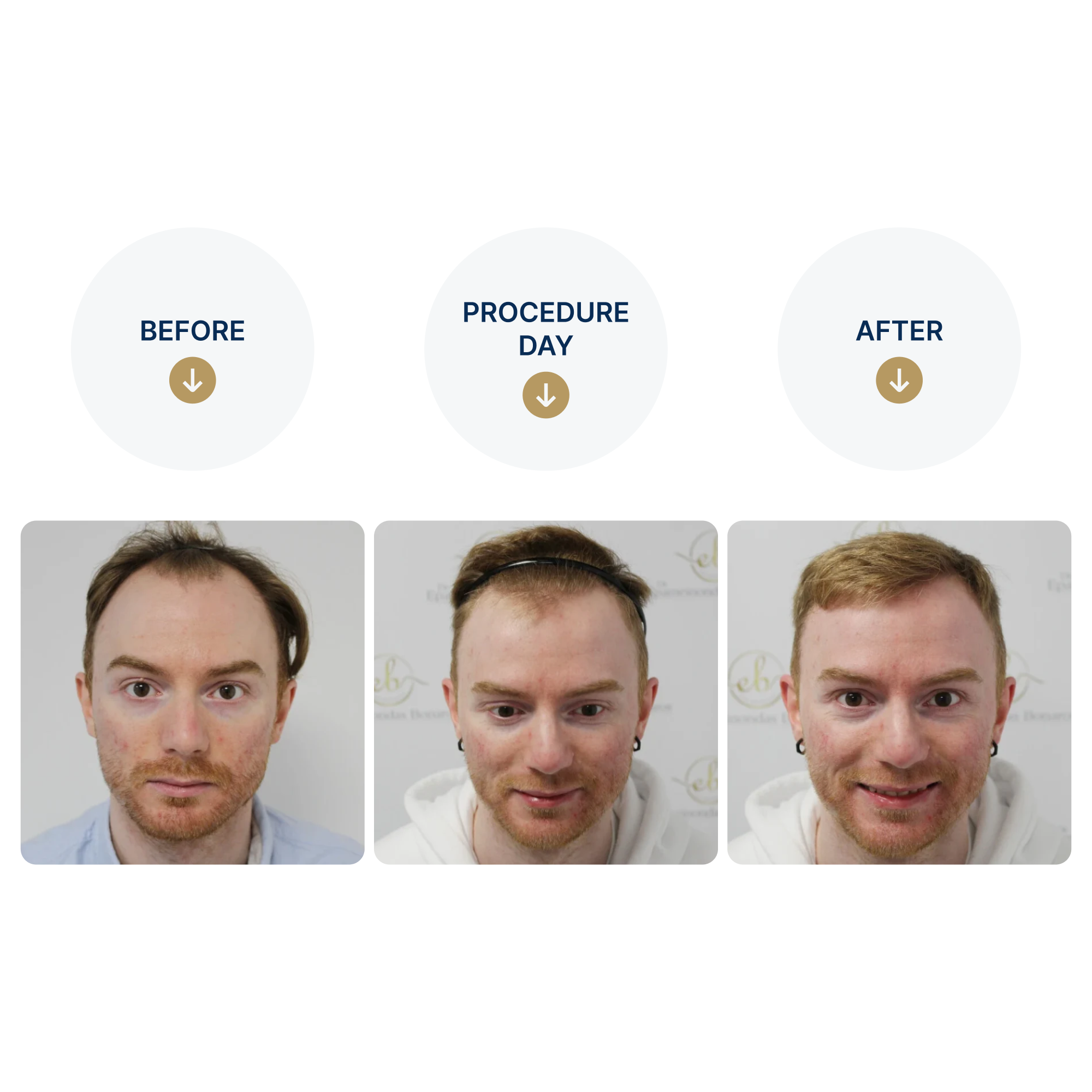
Rebuilding a receding hairline
- Procedure:
- FUE Hair Transplant
- Surgeon:
- Dr Bonaros
- Grafts:
- 2,300 grafts
- Location:
- Hairline
- After photo:
- Full result at 14 months





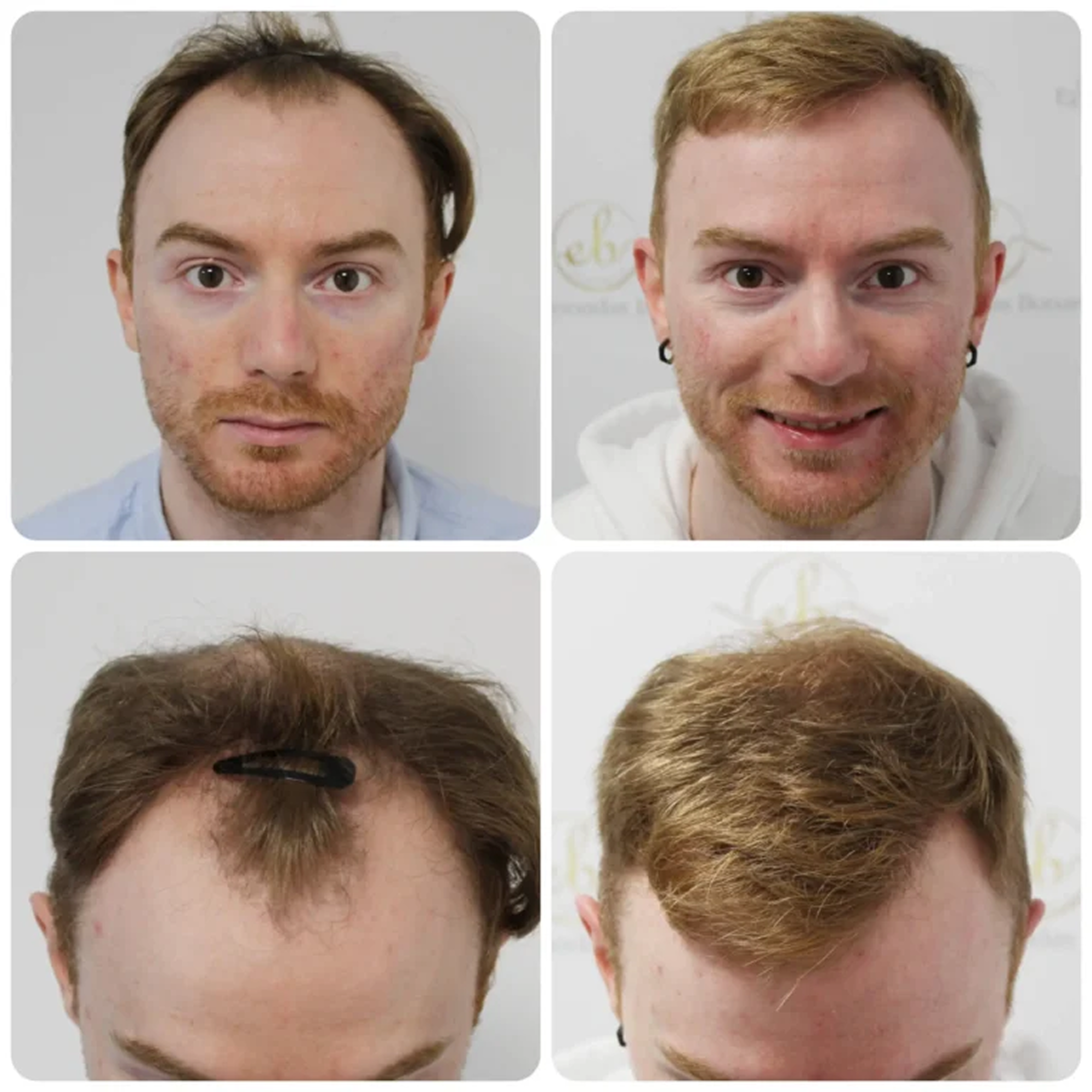
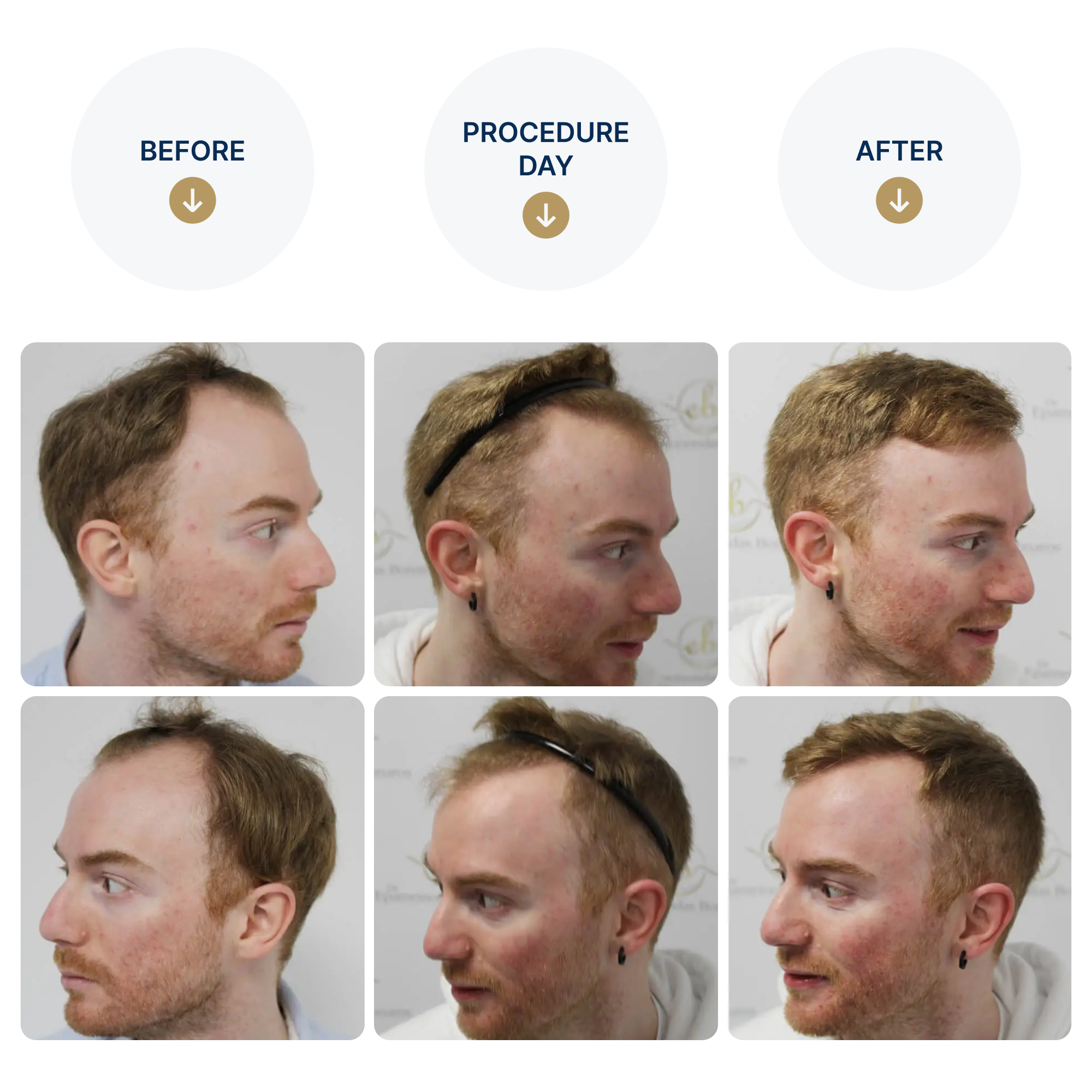
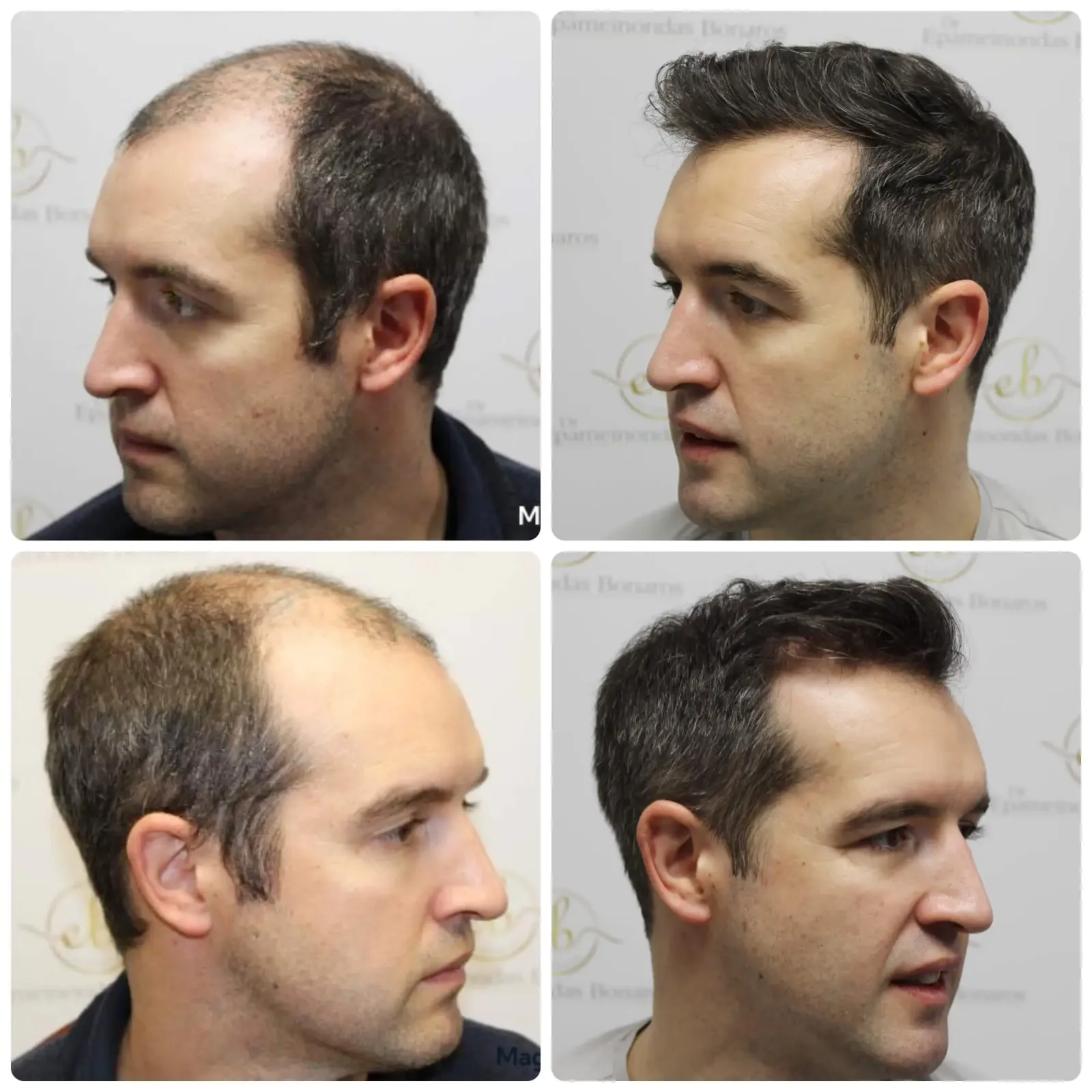
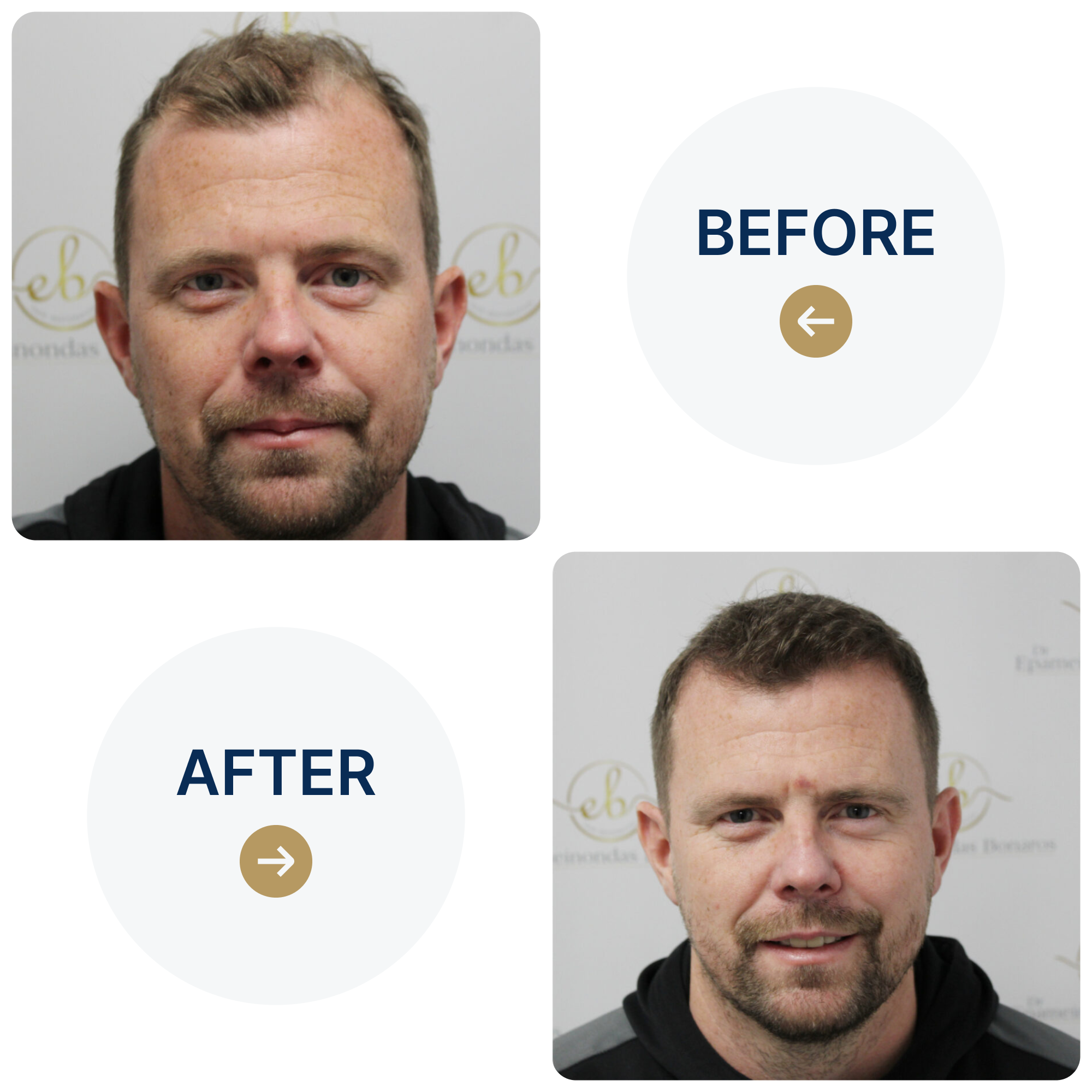
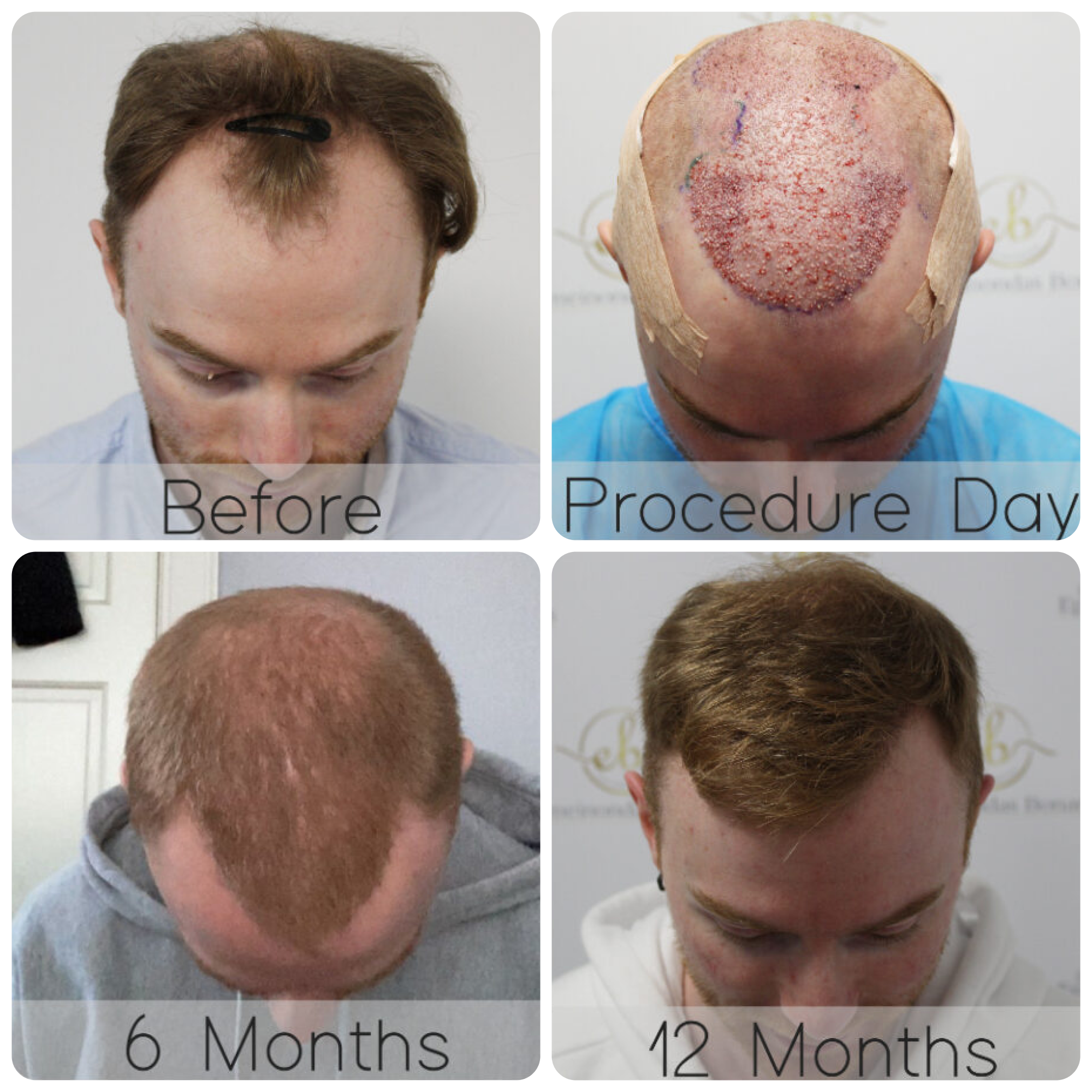
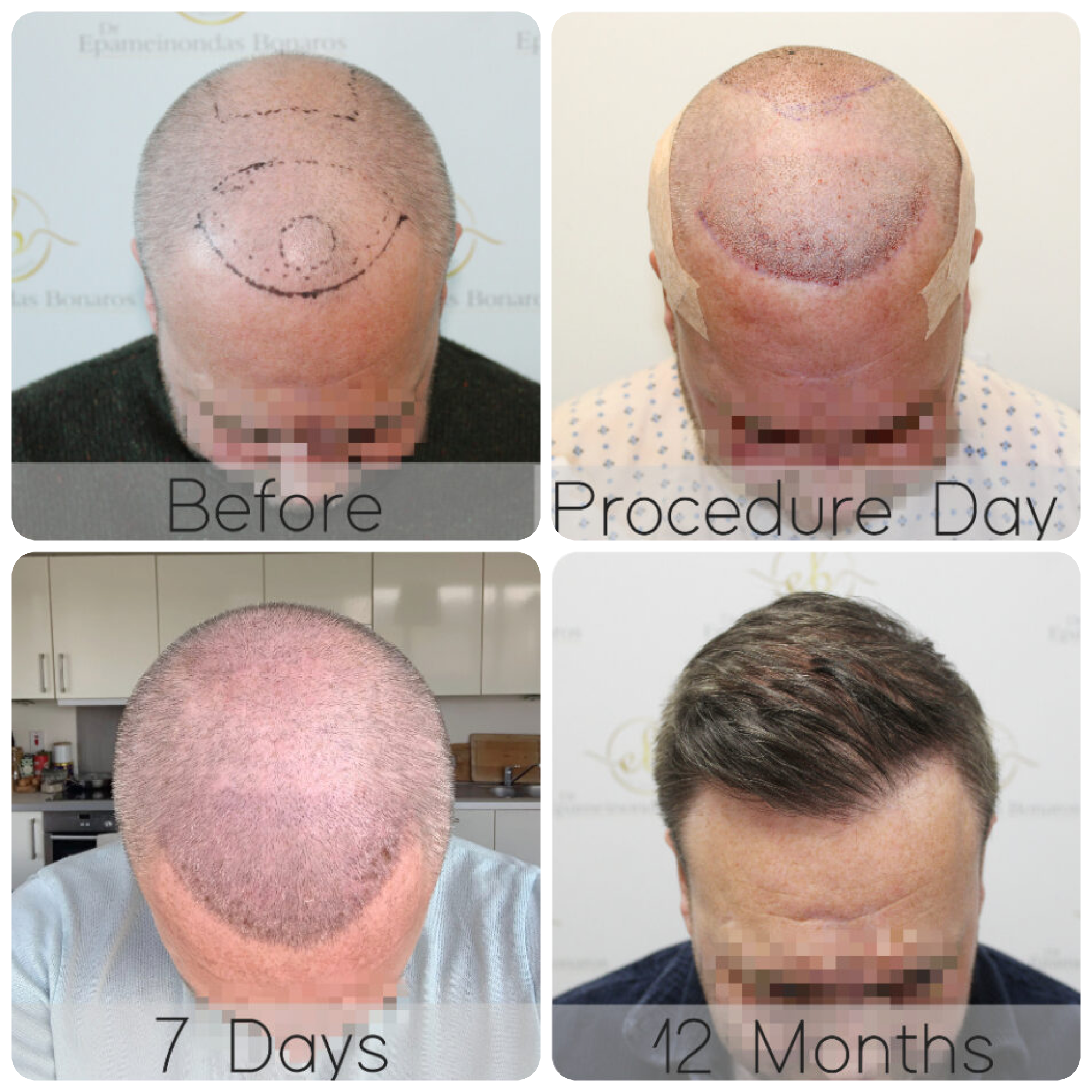
FUE procedure with 3,641 grafts
- Procedure:
- FUE Hair Transplant
- Surgeon:
- Dr Bonaros
- Grafts:
- 3,641 grafts
- Location:
- Hairline, Temples & Crown
- After photo:
- 1 year post-surgery
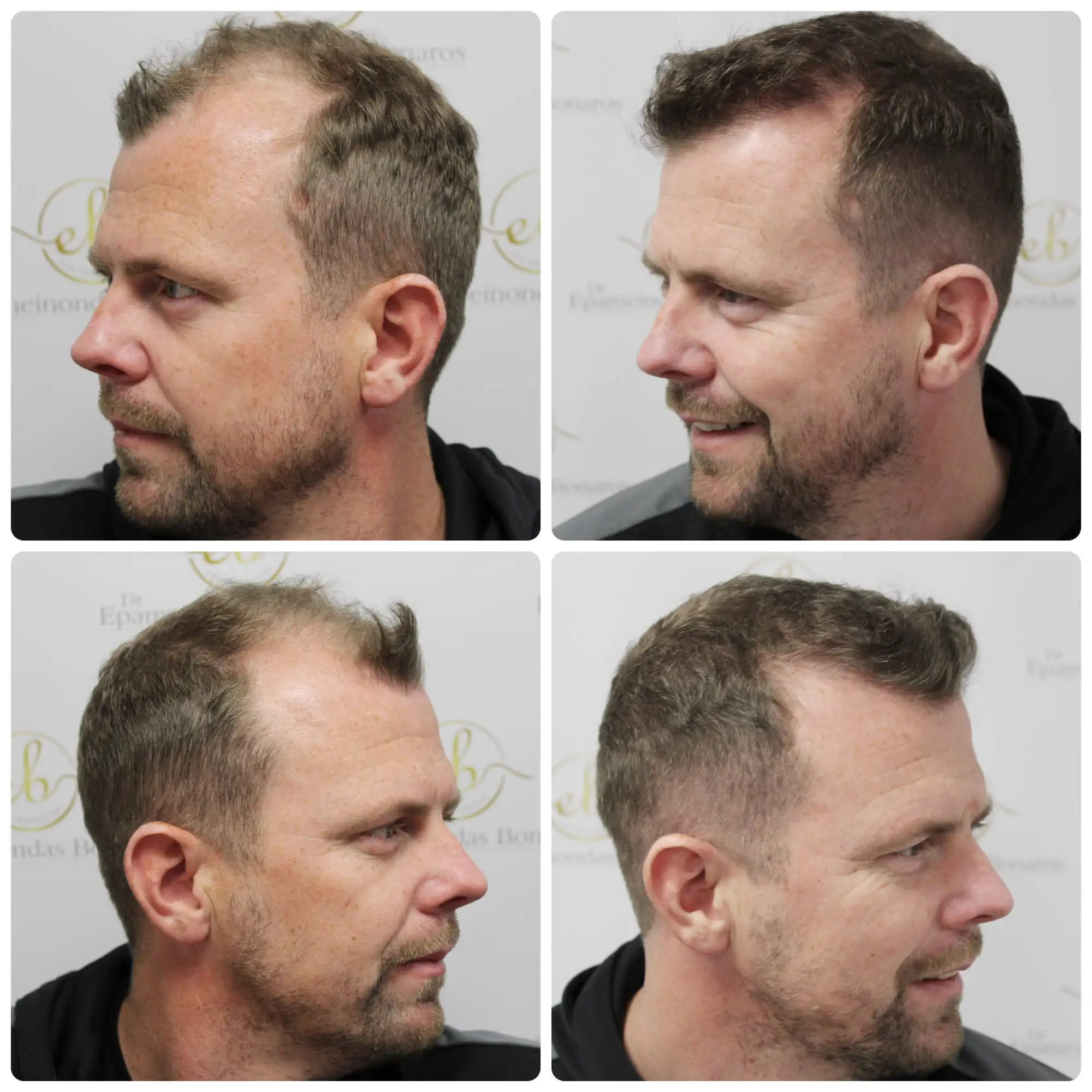
FUE procedure with 4,049 grafts
- Procedure:
- FUE Hair Transplant
- Surgeon:
- Dr Bonaros
- Grafts:
- 4,049 grafts
- Location:
- Frontal & Mid Scalp
- After photo:
- 1 year post-surgery
Frequently Asked Questions
Questions, answered
Dr Bonaros maps the whorl of your crown and plans graft angles and direction to recreate the natural spiral growth pattern.
In suitable candidates coverage can be significantly rebuilt, balanced against your donor supply and long-term pattern of loss.
Each graft is implanted individually at the angle and direction that follows your natural whorl, so the crown grows in a convincing spiral.
Early growth begins around three to four months, with the full result developing over 12 to 18 months.
We assess your pattern and future loss carefully, as crown thinning often progresses, so a conservative plan protects your result over time.
FUE leaves no linear scar, and tiny extraction points in the donor area fade and are hidden by surrounding hair.
Yes, adding grafts between existing hairs is a common way to restore density without removing what is already there.
The relocated follicles are resistant to balding, so a well-planned crown restoration lasts for life.
About the Medical Reviewer
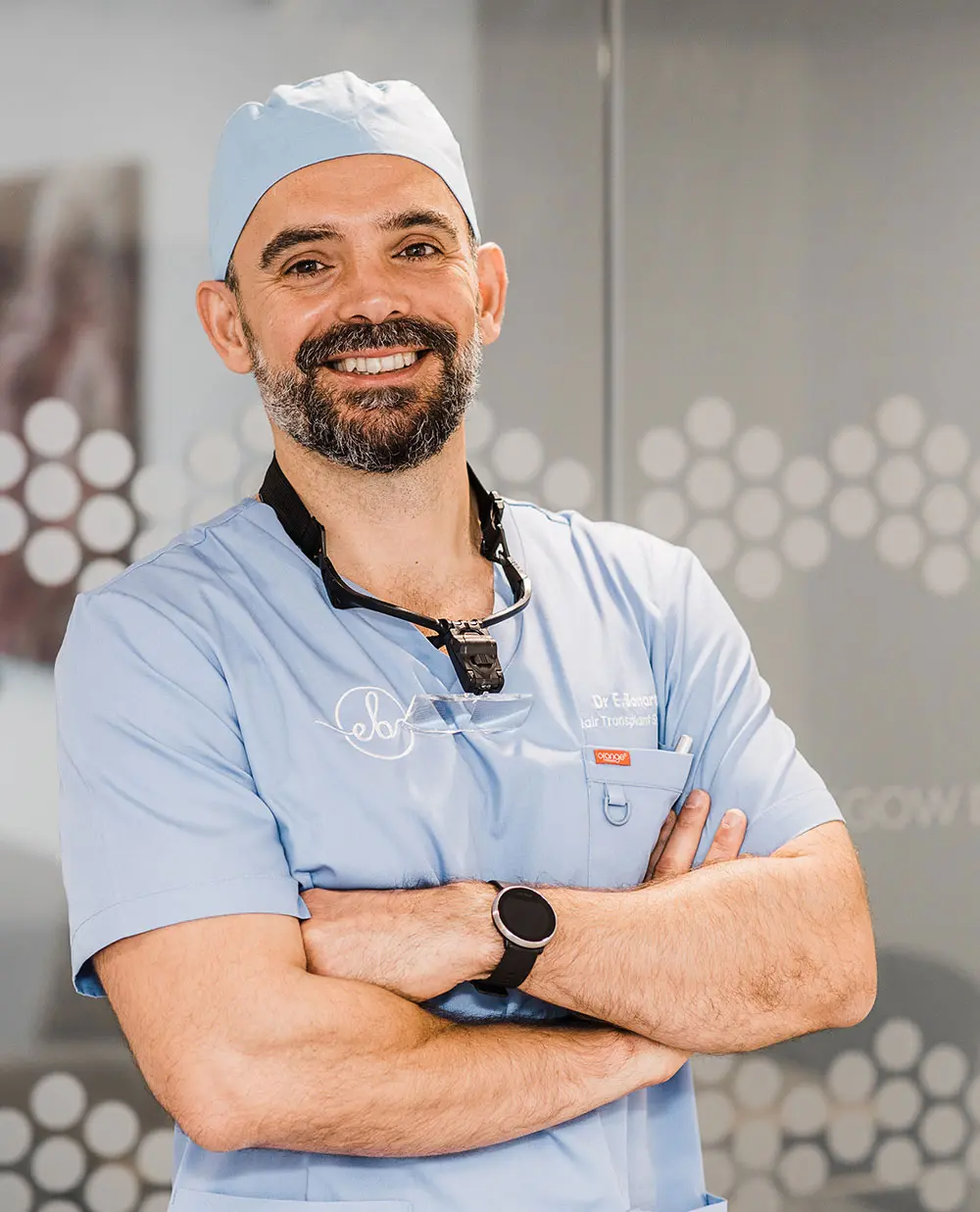
Dr Epameinondas Bonaros
Dr Bonaros is a GMC-registered doctor, an ABHRS Diplomate and a full member of the ISHRS. He has dedicated his career to surgical hair restoration and personally performs every stage of each procedure, from crown mapping to graft placement. This page has been written and reviewed to ensure it is accurate, balanced and patient-focused.
Last medically reviewed: 17 June 2026
Book an Appointment