Recovery & growth
How long does a hair transplant really take to grow?
By Dr Bonaros 12 May 2025
Recovery Hair growth Aftercare
About

Recovery & growth
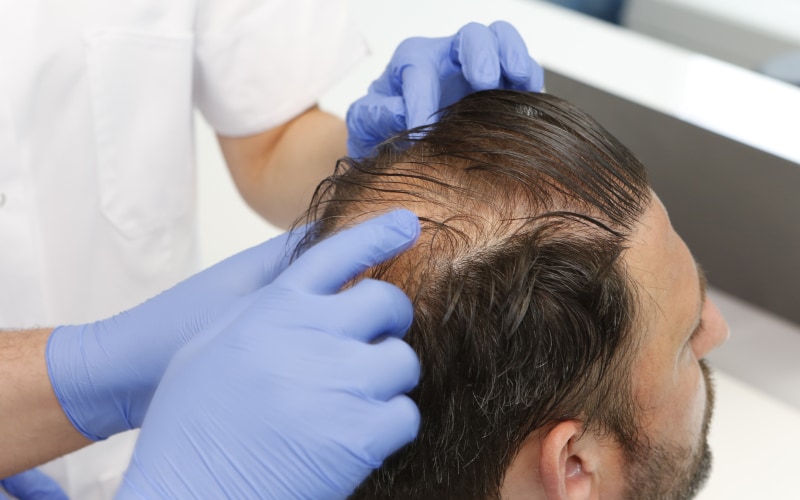
A hair transplant is a long game, not an overnight fix. The grafts are placed in a single day, but the hair you are really waiting for arrives gradually over the months that follow — and knowing what each stage looks like is the best antidote to worry. Here is an honest, month-by-month picture of how your results unfold, and why a little patience is rewarded with hair that looks entirely your own.
In the days immediately after your procedure, the priority is healing rather than growth. Tiny crusts form around each newly placed graft and the recipient area may feel tight or look pink. This is completely normal. The follicles are settling into their new home and establishing a blood supply, and how you care for them now matters more than at any other point in the journey.
During this window it helps to keep a few simple habits in mind:
Somewhere between the second and sixth week, the transplanted hairs begin to fall out. For many patients this is the most unnerving stage — it can feel as though the procedure has failed. It hasn’t. What sheds is only the visible hair shaft; the all-important follicle remains safely anchored beneath the skin, simply entering a resting state before it produces new growth. This is known as “shock loss”, and it is a normal, temporary part of the cycle.
After shedding, the follicles enter a quiet, dormant period. Outwardly, little appears to be happening, and the recipient area may look much as it did before surgery. Behind the scenes, however, each follicle is preparing for its next growth cycle. Try not to judge your result during these months — almost everyone passes through this flat stretch before things pick up.
This is the stage most people look forward to. New hairs begin to emerge — fine, soft and sometimes a little wiry or curly at first. Growth is rarely uniform: some areas sprout ahead of others, which can make the coverage look patchy for a while. That unevenness evens out as more follicles join in.
A simple way to think about how the months map to your result:
From around the eight-month mark, the change becomes obvious. The fine early hairs gain calibre and pigment, the patchiness fades and genuine density takes hold. This is usually when patients stop counting hairs in the mirror and simply start enjoying their hair again.
“The grafts are placed in a single day, but the result is grown over a year. Patience is part of the treatment.”
— Dr Bonaros
By roughly twelve months, the vast majority of transplanted follicles are producing mature hair, and the result you see is essentially the result you keep. In some cases — particularly with crown work or higher graft numbers — the final refinements continue up to fifteen or eighteen months. The hair grows, can be cut and styled normally, and will continue to do so for life, because it is taken from areas resistant to the hormone that drives hair loss.
This article is for general information only and is not a substitute for personalised medical advice. Recovery timelines vary between individuals — always follow the specific guidance given to you by your surgeon.
FAQ
Most patients see the bulk of their new hair between months six and nine, with the final result — full density and texture — settling at around twelve months. In some cases, the very last refinements continue up to fifteen or eighteen months.
Yes, and it is expected. The transplanted hairs shed within the first two to six weeks while the follicle itself stays safely in place beneath the skin. This shedding phase is a sign the process is working, not a sign anything has gone wrong.
There is no way to rush the body’s natural hair cycle, but you can protect it. Following your aftercare instructions closely, eating well, staying hydrated, avoiding smoking and managing stress all give your follicles the best possible environment to regrow on schedule.
Early regrowth can appear fine, wispy or slightly uneven — this is temporary. As each hair completes more growth cycles it thickens and matures, and by the twelve-month mark it blends seamlessly with your existing hair.
Continue reading
Every result begins with a one-to-one consultation with Dr Bonaros, who performs every procedure himself. Find out what is realistic for you.

Book a private consultation with Dr Bonaros to discuss your goals, understand your options, and discover the personalised plan that is genuinely right for you, and for your confidence.
Book a consultation